To Santa or Not to Santa?

To Santa or Not to Santa?

There is a certain, lovable, old fat man who is causing quite a stir among Christian parents these days. His name is Santa Claus. He has always been a troublemaker—breaking and entering, eating cookies without any supper, and being super judgemental. But for other reasons with those, parents are deciding whether or not they would like to tell their kids about old St. Nick. This is a decision that every family should make for themselves, but here are three helpful considerations as you process through the question

Read More

How Do I Know I’m Saved?: What Should I Do?

How Do I Know I’m Saved?: What Should I Do?

I read a lot. Whether it’s books, articles, blogs, or magazines, I like to read. However, one thing that frustrates me is when an author doesn’t answer the “so what” question. This question tells us why what we’re reading is important and how we can apply it to our lives. Over the past five weeks, we’ve been answering the question, “How do I know I’m saved?” We’ve answered that question with five tests: (1) what is my relationship to Jesus Christ?, (2) what is my relationship to the world?, (3) what is my relationship to sin?, (4) what is my relationship to people?, and (5) do I have the witness of the Holy Spirit in me? We’re concluding this series with the “so what” question: What should I do?

Read More

How Do We Love Others?

 How Do We Love Others?

Though it is fulfilling, satisfying, and eternally secures us, there is much more to being a Christian than just going to heaven. We have a responsibility, privilege, and task to accomplish here on earth. If we are truly in Christ, then our relationship to Jesus Christ himself, the world around us, the sin that we have to actively put away, and the people that God puts in our lives, must be centered upon His Word and character. But what does it really look like as we interact with people? What does it mean to truly love others?

Read More

Should You Say “Goodbye” to Facebook? Getting at the Real Problem

Should You Say “Goodbye” to Facebook? Getting at the Real Problem

If you’re like me, chances are you’ve had a moment in the past where you considered saying “goodbye” to social media. The passive aggression, emotional rants, narcissism, and overall productivity drain on life can make anybody question the benefit of staying plugged in. Join that with what appears to be a decrease in tangible community in modern culture, and social media actually begins to look like a fundamentally negative aspect of modern life. Yet, most modern advances, including social media, are not inherently evil. Rather, it all comes down to how these powerful tools are used.

Read More

Finding the Right Bible for Your Child

Finding the Right Bible for Your Child

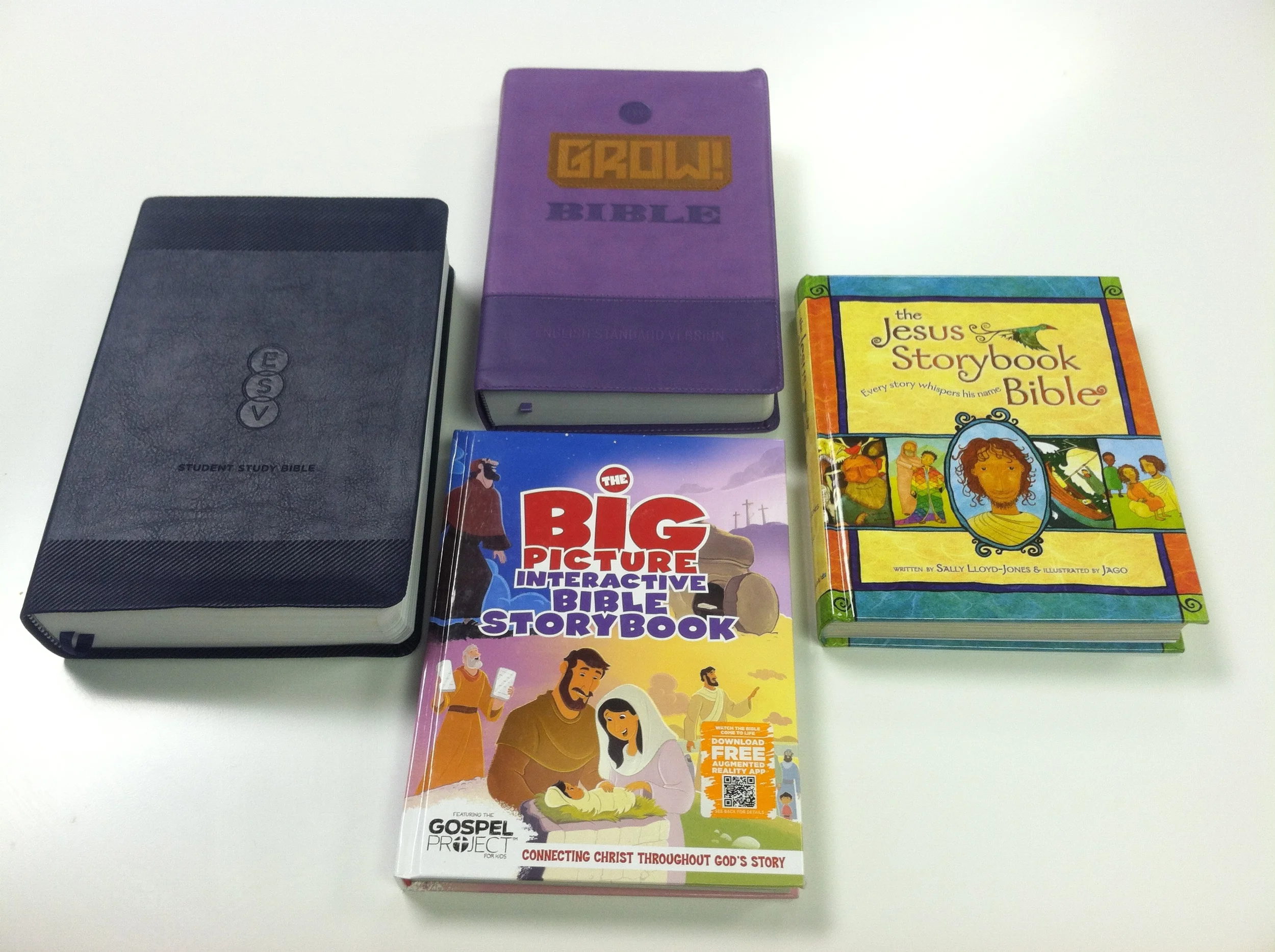
One of the greatest gifts that you can give to your child is the gift of God’s word. Kids need their own copy of the Bible for a few reasons. First, they need to know that God’s word is for them, not just for mommy and daddy or for their vKids leaders. Second, God’s Word never changes, but how we present it to kids does. Kids need a developmentally appropriate version of the Bible so that they can begin hiding the stories, themes, and messages in their heart. Finally, God’s word, regardless of how it is packaged, has the power to change hearts and lives. 

Read More

Think Before You Post: The Art of Discernment on Social Media

Think Before You Post: The Art of Discernment on Social Media

Over the past few weeks, we have been looking at how we as Christians are supposed to live and interact on social media. We’ve discussed topics such as sarcasm, pride, and conflict. Throughout each of those posts, one common theme has emerged: the importance of discernment. When you Google the word discernment, one of the first definitions that appears is “the ability to judge well.” If we are going to think and act like Christians on social media, you and I must practice discernment. We must have the ability to judge when we should read something and when we should not. We should have the ability to judge when to say something and when to not. So, what does it look like to practice discernment on social media?

Read More

What Do You Do When a Brawl Breaks Out On Facebook?

 What Do You Do When a Brawl Breaks Out On Facebook?

You’ve seen it happen before: someone you know publishes a post, comment, or picture on Facebook or some other social media site that stirs up conflict. Perhaps they start something without sharing names specifically, or perhaps they actually call someone out by name. Just maybe, that’s you. You’ve been the one to start conflict over social media. Each one of us handle conflict differently – some of us run away from it and others run towards it. Conflict on social media, however, is a different beast altogether. 

Read More

How Do We Handle Our Pride While Engaging Social Media?

Photo by Andreas Ivarsson

“God cannot bear with seeing his glory appropriated by the creature in even the smallest degree, so intolerable to him is the sacrilegious arrogance of those who, by praising themselves, obscure his glory as far as they can.”1 –John Calvin

I can only imagine what Calvin would say about social media today! Even as I publish this blog, the leading experts in “online platform building” (yep, that’s a thing) recommend that I share a link to this blog post in three different ways through Twitter within just 24 hours of posting it. To be fair, I probably will. I believe in the things I write, and I hope my blogs can be beneficial to as many other people as possible. But it doesn’t take very many tweets or Facebook statuses to realize that “self-promotion” walks a fine line tempting my pride.

Maybe you don’t blog. Maybe you use social media for its originally stated purpose: being social. Yet, if you’re like me, you’ve still caught yourself  checking on your profile throughout the day to see how many “likes,” “shares,” “favorites,” and “retweets” you’re getting. Is this a problem?

Getting to the Root

Let’s go ahead and get this out of the way from the start: social media is not inherently evil. Facebook, Twitter, Instagram, Pinterest, and the 10 new social media sites that have launched as I write this sentence are not the problem. We are. Social media may be a new medium, but it sheds light on the same old struggles. Whether it’s pride, gossip, anger, or a lack of self-control (just to name a few), social media can be sinful simply because we are sinful.

In regards to our pride, then, what’s most important is where the foundation for our interactions on social media comes from. I might genuinely desire to share silly and random details of my life through quirky tweets, statuses, and pictures, wanting to connect with others that I might not be able to regularly live with in physical community. Or I might just want you to think I have an incredibly interesting life and am much wittier than you. It all comes down to where my heart is and what my intentions are.

Check Yourself Before You Wreck Yourself

Maybe the best question we can ask ourselves as we guard against pride and the other issues that can creep up so easily with social media is simply, “Why?” With each tweet, Facebook status, or picture, take a moment to reflect on why you’re sharing what you’re sharing. There doesn’t have to be a deep purpose, but there always is some purpose. James 1:19 talks about how everyone should be “quick to hear, slow to speak, [and] slow to anger.” I think the same principles could be applied to how we engage on social media as well.

To wrap things up, here’s a list of ways you can “check yourself before your wreck yourself” with pride in social media:

  1. If looking on social media multiple times a day just to see if you have any new “likes,” “shares,” “favorites,” “retweets,” and “followers” is a consistent habit for you, you should check yourself.
  2. If you have to pause to consider whether or not a post is prideful and decide to post it anyway, you should check yourself.
  3. If you’re okay with “bending the truth” a little to produce an overall more enticing post, you should check yourself.
  4. If you care more about your “follower” to “following” ratio then actually connecting with people, then you should check yourself.
  5. If the majority of what you post is all about you, then you should check yourself.

In case you were wondering, all of these come from personal experience and struggle. Pride is a subtle but powerful trap that we can fight against in social media through defining our purpose, checking our motives, and doing everything for the glory of God.



1C.J. Mahaney. Humility: True Greatness (Sisters: Multnomah Publishers, 2005), 33.

Lord, Teach Us How to Tweet: The Sarcastic Came to Him and He Began to Teach Them Saying…

Lord, Teach Us How to Tweet: The Sarcastic Came to Him and He Began to Teach Them Saying…

I delete one-third of the posts I type on social media before I even share them. Why? Because, even after many years of following Jesus, I still get it wrong. Jesus said that out of the overflow of the heart, the mouth speaks (Matthew 12:34; 15:18-20). In the 21stcentury, out of the overflow of our heart our fingers tweet. I’m linked up to 3 different social media sites on my phone. At any point, what I think in my mind can instantly be transferred to my fingertips and shared. Admittedly, I delete posts before I even post them because I get it wrong. Too often, I find myself looking down at what I’ve typed and it’s useless, self-righteous, flippant, antagonistic, or self-serving. If you go check out my posts, you will likely conclude that I’ve gotten it wrong in the past. But I follow Jesus; I post, tweet, and share; and I want to get it right.

Read More